Uyyakondan Thirumalai Temple

உய்யக்கொண்டான் திருமலை திருக்கோயில்
Uyyakondan Thirumalal Uyyakondan Thirumalal Uyyakondan Thirumalal Uyyakondan Thirumalal Uyyakondan Thirumalal Uyyakondan Thirumalal Uyyakondan Thirumalal Uyyakondan Thirumalal Uyyakondan Thirumalal Uyyakondan Thirumalal Uyyakondan Thirumalal Uyyakondan Thirumalal Uyyakondan Thirumalal Uyyakondan Thirumalal Uyyakondan Thirumalal Uyyakondan Thirumalal Uyyakondan Thirumalal Uyyakondan Thirumalal Uyyakondan Thirumalal Uyyakondan Thirumalal Uyyakondan Thirumalal
Also known as Thirukatkudi (திருக்கற்குடி- the sacred dwelling on the rock) in ancient times, the Uyyakondan Thirumalai Temple on the northwestern outskirts of Thiruchirapalli is a very important Saivite site. The Sivan temple is a Paadal Petra Sthalam celebrated in the Thevaram as early as the 7th century by all three of the Moovar: Appar, Sampanthar and Suntharar. Only a handful of the 276 Paadal Petra Sthalams have that distinction. The Lord here is known by many names including Ujjeevanathar (உஜ்ஜீவநாதர்). There are two Ambals here, Anjanakshi (அஞ்சனாட்சி) or Mayvizhiyammai the primary consort and another shrine for Balambigai.
Legends associate the temple to the story of Markandeyar, the young lad who was destined to die at age 16. The Lord spared his life by destroying Yaman himself. If Thirukadayur was where Yaman was killed and Thirupainjeeli was where he was resurrected to bring back balance to the world, it was at Uyyakondan Thirumalai that Markandeyar received his blessings from the Lord. There is an interesting legend about why there are two Ambals here. A long time ago the idol of one of the Ambals was damaged by invading forces. Rather than repairing the idol, the devotees later decided to replace it. But the original Ambal refused to be moved. So they installed the new idol in a separate shrine.
The temple had existed as a prominent temple much prior to the great building and rebuilding efforts of the imperial Cholas, as attested by its mention in the Thevaram in the 7th century. There is some mention that the Pallava king Nandivarman built part of the original temple. But the Cholas rebuilt this as a solid granite temple in the 10th century and have made immense contributions during their rule. There is evidence that Paranthakan I was an early benefactor. Sembiyan Mahadevi had made a large donation of jewllery to the temple during the tenth regnal year of Rajarajan I. The temple contains a large number of inscriptions, including some very important ones from the reign of Rajendran I in the 11th century. Kulothungan I, Kulothungan II and Kulothungan III are other Chola kings whose inscriptions are found here. There are also Pandiyan inscriptions. It was further expanded during Vijayanagar times, The existing masonry is mostly from the Nayakkan period. During the Carnatic Wars of the mid 18th century, French and British troops occupied the temple and desecrated it. It was heavily damaged during the Siege of Trichinopoly (1753-1754) due to a frontal assault by British soldiers on the French garrison occupying the temple.
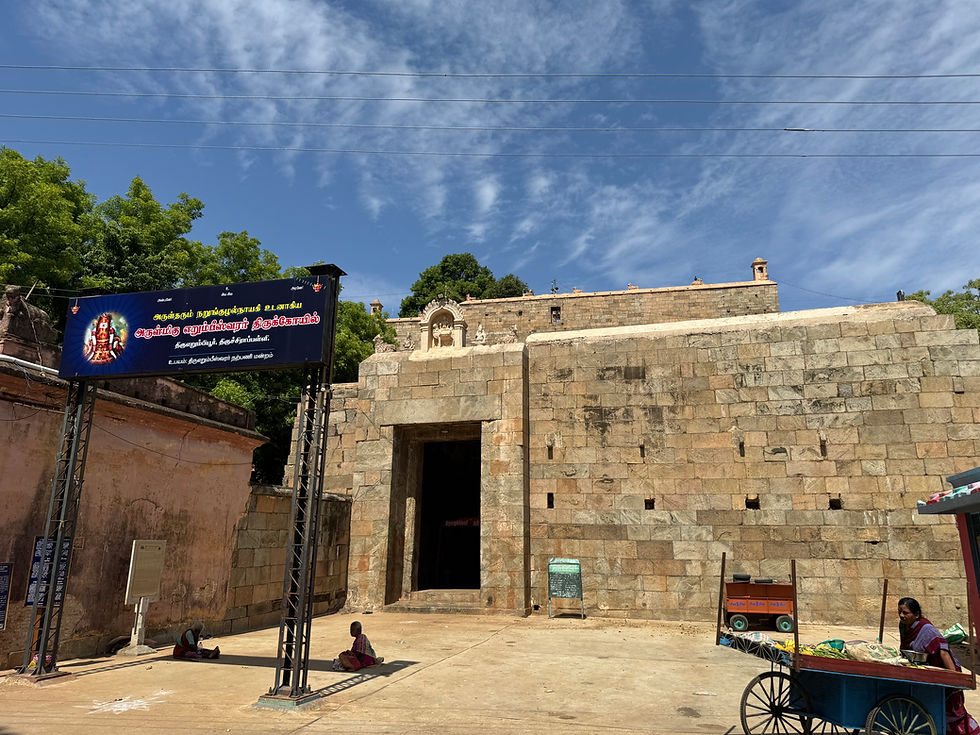
The temple is built on a 30 meter tall rocky hill. It has formidable granite fortifications all around. It is about 4 acres in area. There is a rajagopuram on the street level which faces east. You climb a steep flight of about 100 steps to reach the next level through another gopuram which faces south. Then you enter a court yard that has a Kodimaram, Balipeedam and Nanthi. The level of the sanctum is reached by another short flight of steps. The sanctum faces west where the Lord manifests as a relatively small suyambulingam There is a shrine parallel to it that contains an especially beautiful idol of Anjanakshi in standing posture. There is another shrine for Balambigai. The back koshta of the sanctum has an idol of Ardhanareeswarar instead of the commonly seen Lingodhbavar or Mahavishnu idols in that location, which is rare. This suggests contribution from Adiya I. There is a beautiful idol of Goddess Jyestha at this temple. It is evidence of the popularity of this particular goddess in these parts from ancient times.
There are a number of theerthams including the Gnanavavi and the Enkona Kinaru. The sthalavirutcham is the Vilvam. Many festivals for Lord Sivan are celebrated here. The 9 day Brahmotsavam in the Tamil month of Panguni (March/April) and Sivarathiri are the major festivals. The temple is open from 7 a.m. to 12:15 p.m. and then from 4:30 to 8 p.m. with a midday closure. It is currently administered by the HR and CE Department of the Government of Tamil Nadu. The Dharmapuram Adheenam has privileges here.
It is the 121st Paadal Petra Sthalam and the 6th on the southern side of the Kaveri in Chola Nadu. It was sung in praise by all three of the Moovar. Sundarar in his pathigam says:
விடையா ருங்கொடியாய் வெறியார்மலர்க் கொன்றையினாய்
படையார் வெண்மழுவா பரமாய பரம்பரனே
கடியார் பூம்பொழில்சூழ் திருக்கற்குடி மன்னிநின்ற
அடிகேள் எம்பெருமான் அடியேனையும் அஞ்சலென்னே
Thevaram 7.27
( You who has the bull on your pennant, has the Konrai flowers with intoxicating fragrance adorning your hair, who wields the white Mazhu or battle-axe, who is the Supreme Being who is fully aware, you dwell here at Thirukatkudi surrounded by lush groves laden with fragrant flowers, and you tell me, your humble devotee, not to fear).
Thirunavukkarasar praises thus in his Thiruthaandakam:
மூத்தவனை வானவர்க்கு மூவா மேனி
முதலவனைத் திருவரையின் மூக்கப் பாம்பொன்
றார்த்தவனை அக்கரவம் ஆர மாக
அணிந்தவனைப் பணிந்தடியா ரடைந்த வன்போ
டேத்தவனை இறுவரையிற் றேனை ஏனோர்க்
கின்னமுதம் அளித்தவனை யிடரை யெல்லாங்
காத்தவனைக் கற்குடியில் விழுமி யானைக்
கற்பகத்தைக் கண்ணாரக் கண்டேன் நானே.
Thevaram 6.60
(He who is older than all celestial beings, who has the eternal immortal form, is the primary being, who wears the fierce snake around his waist like a belt, who embraces his devotees with love and gives them blessings as sweet as the honey from caves in the wilderness, who protects them from all obstacles, he resides here at Katkudi, he is like the wish-fullfilling divine tree the Katpakam. I saw him here to the great joy of my eyes).
It is located about 4 km or 10 minutes to the west of the centre of Thiruchirapalli city. It is about 330 km or 6 hours southwest of Chennai. We visited in August 2026. We were based in Thiruchirapalli.
Sources:
P.K. Nambiyar and K.C. Narayana Kurup, Census of India 1961. Volume IX. Part XI-D. Temples of Madras State. Thiruchirapalli and South Arcot, p. 200.
S. R. Balasubrahmanyam, Early Chola Temples, section “Temples in Uyyakkondan (Tirumalai)".
Hultzsch, E., ed. South Indian Inscriptions, Vol. II, Part III, No. 75. Archaeological Survey of India.
Krishna Sastri, H., ed. South Indian Inscriptions, Vol. III, No. 98. Archaeological Survey of India.
Thevaram: Thirugnanasambandar 1.043; Thirunavukkarasar 6.060; Sundarar 7.027.
Dinamalar. “Sri Ujjeevanathar Temple” Dinamalar Temple. Accessed October 10, 2026.
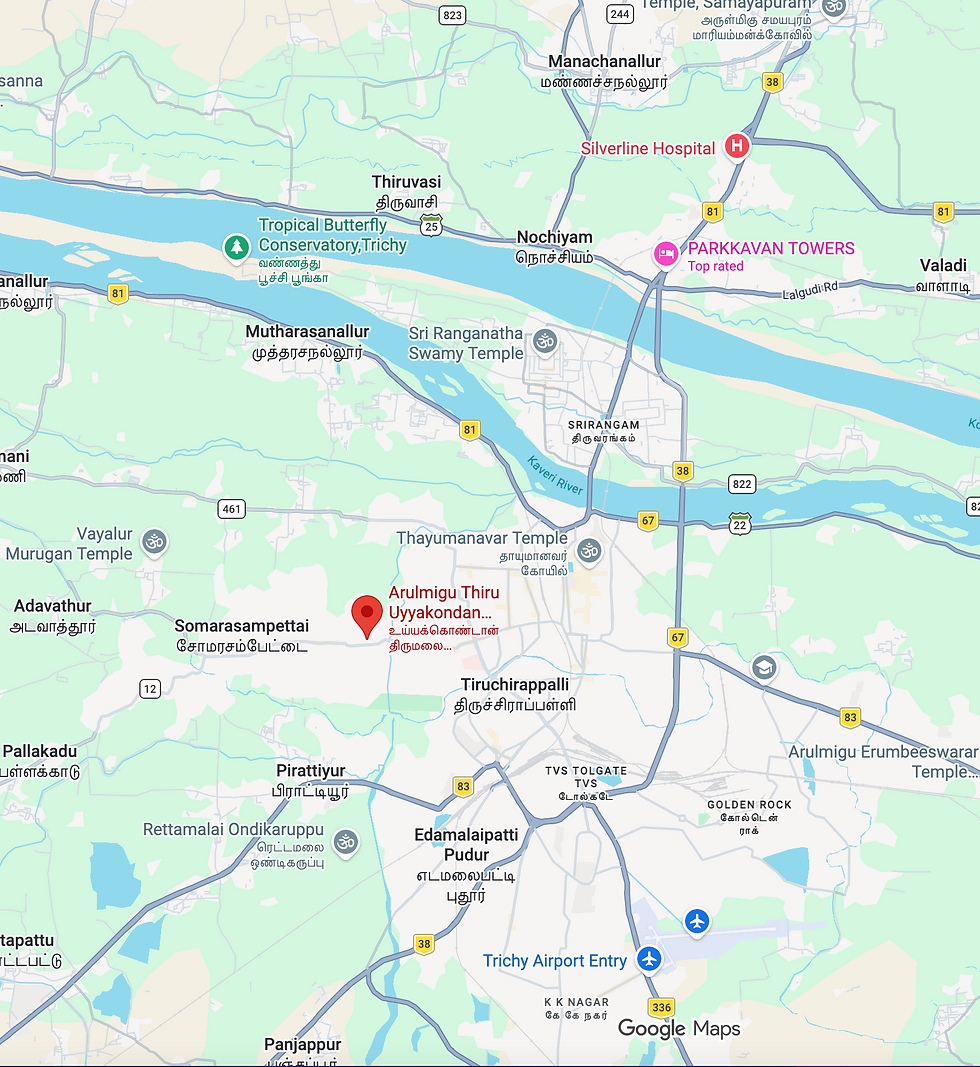
Courtesy Google Maps


Comments