Apathsahayeswarar Temple, Alangudi (#115)

Updated: Sep 7
ஆபத்சகாயேசுவரர் திருக்கோயில், ஆலங்குடி
Alangudi Alangudi Alangudi Alangudi Alangudi Alangudi Alangudi Alangudi Alangudi
This is the Guru Sthalam in the Navagraham temple circuit. Guru is the Great Teacher and is Jupiter or Viyalan in Indian astrology. The presiding deity is Lord Sivan as Apathsahayeswarar in Sivalingam form. The Dakshinamurthy shrine here stands for Lord Guru. It is a Paadal Petra Sthalam with dedicated pathigams sung in its praise in the early seventh century by the Saiva Kuravar. There are many legends here describing incidents where Lord Sivan came to the aid of people in distress giving him the name Apathsahayeswarar, the Lord who protects us from danger. In ancient times the site was referred to as Thiruvirumpoolai (திருவிரும்பூளை). It is one of the Pancha Aranya Sthalams that are associated with forests. It is a Parivara Sthalam or satellite temple of the Mahalingeswarar temple at Thiruvidaimaruthur.
Aalam means poison in Tamil and Kudi means drink. The Lord here, Aalangudiyan, drank the poison that emanated from churning the Ocean of Milk by the Devas and Asuras and thus saved the universe from destruction. The temple is associated with the Saivite saint Sundarar. Once, when Sundarar was traveling in the area, he was caught in a flood and it is said that Lord Sivan himself came in a boat to rescue him. The Sundarar idol here was once smuggled away by a powerful king. One of the priests retrieved it and was discreetly bringing it back wrapped in a blanket, when a guard accosted him. The priest lied that he was carrying his infant child who had small pox. The guard did not investigate further. To this day the idol bears pockmarks.
The temple was originally built by Chola kings. It was later renovated by Nayakkan kings in the 16th century. There are 5 sets of inscriptions from the Chola period mainly dealing with financial transactions of the temple. The temple is owned and administered by the HR and CE Department of the Government of Tamil Nadu these days.
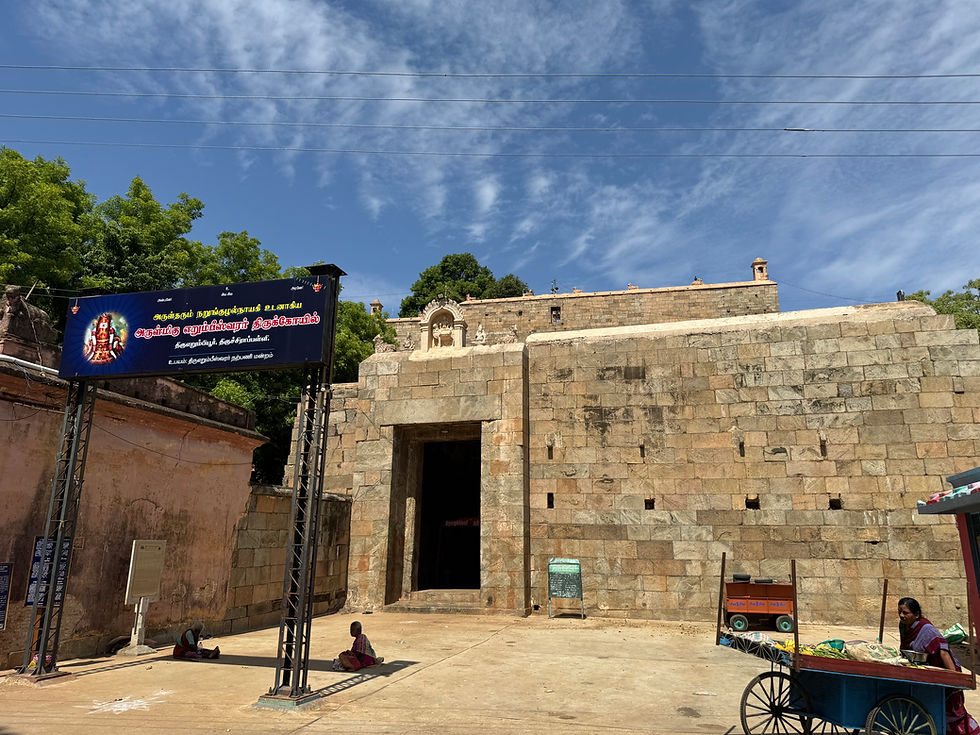
At around one to two acres in area, it is a modest sized temple. It has two prakarams and a 5 tier rajagopuram that faces south. There is another 5 tier gopuram at the north entrance. The Amman, Elavar Kuzhali is in the first shrine that you encounter as you enter. There is no dedicated shrine for Lord Guru or Jupiter. The Dakshinamurthy shrine is the Guru sannadhi. There are a number of shrines including a special shrine for Lord Vinayagar, the Kalangamatkatha Vinayagar (கலங்காமற்காத்த விநாயகர்).
The Sthala Virutcham is the Poolai tree or the Silk Cotton. Once there was a forest of these trees. Sadly none is left today. There are 15 theerthams associated with the temple. The main ones are the Amirtha Pushkarani inside and the Chakra Pushkarani outside. The major festival is the Brahmotsavam in Chithirai (April/May). It is special to worship here on Thursdays.
The temple is celebrated in the 7th century Tamil Saivite canon, the Thevaram. It is the 215th Paadal Petra Sthalam and the 98th on the south side of the Kaveri. Thirugnanasampanthar and Thirunavukkarasar rendered the pathigams here.
Gnanasampanthar entreats thus:
சீரார் கழலே தொழுவீ ரிதுசெப்பீர்
வாரார்முலைமங்கையொடும்முடனாகி
ஏரா ரிரும்பூளையிடங் கொண்டஈசன்
காரார் கடல்நஞ் சமுதுண்ட கருத்தே
(Oh, thee great people who worship here at my Lord's feet, tell me why did my Lord who resides here at beautiful Irumpoolai with the attractive lady Uma, drink the poison that came out of that dark ocean, tell me why)
Thevaram 2.036
The temple is located 100 km or 1.5 hours east of Thiruchirapalli and 150 km or 3 hours south of Pondicherry. It is about 20 km or 30 minutes south of Kumbakonam and 40 km or an hour east of Thanjavur. We visited in June 2025. We were based in Kumbakonam.
Sources:
Dinamalar Temples - Aabathsahayeswarar Temple Alangudi
N. Chockalingam 1971, Census of India 1961. Volume IX. Part XI -D. Temples of Tamil Nadu: Thanjavur Pages 256-258
Thevaram

Courtesy Google Maps


Comments